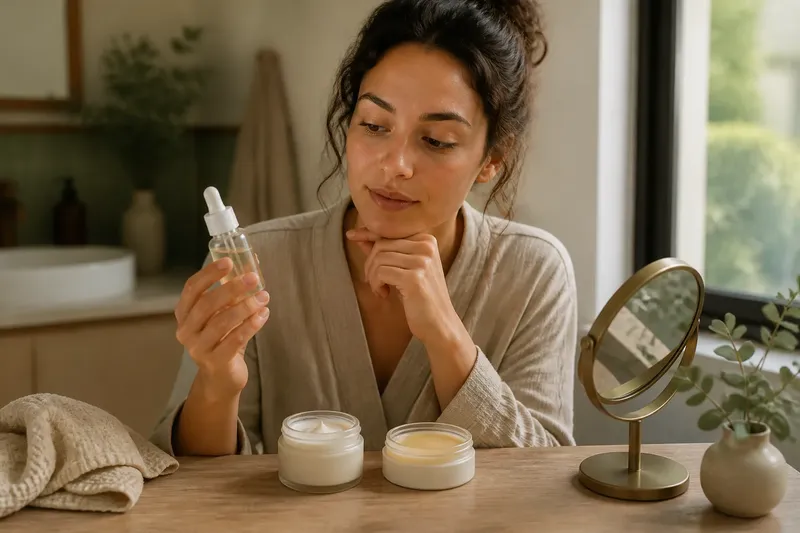
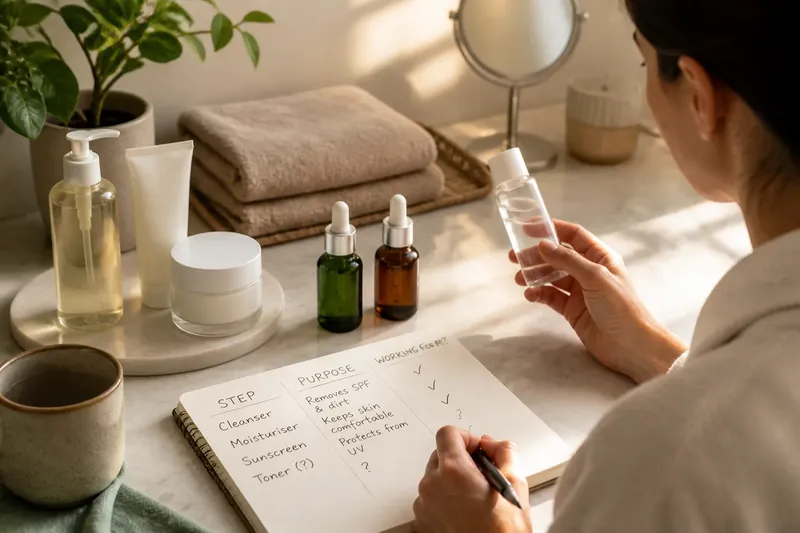
How to Read Beauty Packaging for Storage and Use
Read beauty packaging for clues about storage, access and product information, so you can choose a format that suits your routine and handle it sensibly.
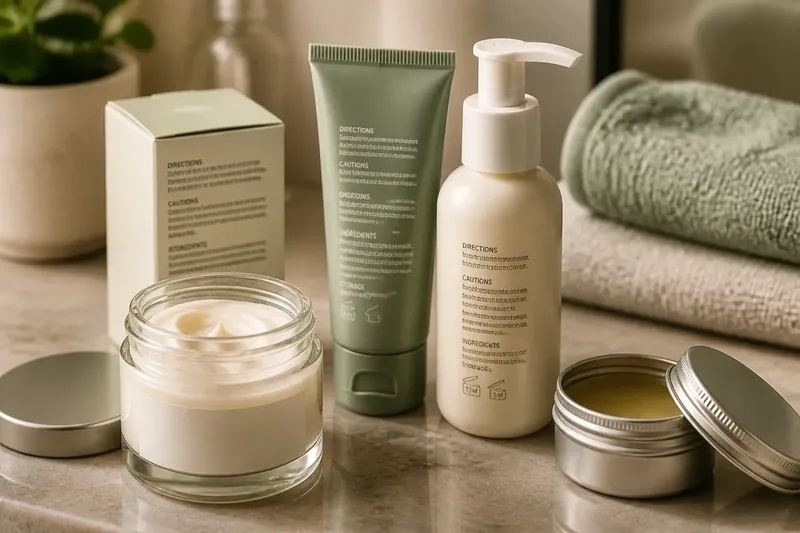
The most common mistake in reading beauty packaging is assuming the prettiest container is the most practical. Reading beauty packaging means checking how a product opens, what its label says and where it can be stored before deciding whether the format suits your routine.
The container affects access and storage
A package is part of the way you handle a product. A wide-mouth jar makes the contents easy to see and reach, but leaves a broad opening exposed while you use it. A tube narrows the opening and can be squeezed with one hand. A pump keeps the reservoir closed between uses, though the nozzle and moving parts need attention.
Think of the container like a lunch box: its shape changes how easily you reach what is inside and where you can put it. A glass jar may suit a steady shelf, while a flexible tube may fit more easily in a wash bag. Neither format is automatically the better choice.
Match the format to the product and your routine
Consider how often you will open the product, whether you need to carry it and how much space is available where you plan to keep it. A jar can be awkward to use with wet hands. A pump may be inconvenient if a thick formula does not dispense smoothly. A tin is portable, but residue can collect around its rim.
Packaging alone cannot tell you whether a formula suits your skin or intended use. Read the product name, directions, cautions and ingredient list. If you have a skin condition or a concern about an ingredient, seek advice from a qualified health professional.
Check what the label and closure actually tell you
A beauty package may carry directions, cautions, ingredients and storage guidance. Keep the label legible, and consult it before moving a product to a different place or container. A seal or protective component can indicate that a package has not been opened, but different closures serve different purposes; do not treat one as a promise about the formula.
- Check the opening. If you can reach the contents without touching them, use that access method; otherwise, use a clean tool when appropriate or choose a format that is easier to handle.
- Check the closure. If the lid or cap closes securely, store the product as directed; if it is damaged or will not stay closed, follow the maker’s guidance rather than carrying it loose.
- Check the dispensing mechanism. If the pump or nozzle works as intended, keep it clean and use it normally; if it clogs or stops dispensing, consult the label or manufacturer instead of forcing it.
- Check the storage directions. If the label names a suitable storage condition, follow it; if the guidance is unclear, ask the manufacturer or a qualified professional where relevant.
- Check the label remains readable. If the directions and product identity are clear, keep the package available; if they are obscured, do not transfer the contents without preserving that information.
- Check the container before reuse. If it can be cleaned thoroughly and its material is suitable, reuse only where the maker’s instructions allow; if residue or hard-to-clean parts remain, do not refill it with another product.
Which beauty package suits your needs?
Is a jar or tube easier to keep clean?
A tube limits direct access to the contents, while a jar requires opening a wider surface. With either format, close the package promptly and follow its handling directions.
Is a pump always more hygienic than a jar?
A pump reduces the need to reach into the reservoir, but its nozzle can collect residue. The closure and your handling habits also matter.
Why does a beauty product have an outer carton?
A carton can hold extra printed information and protect the inner container during handling. Its presence does not replace the storage directions on the product itself.
Can I transfer a product into another container?
That may make the original directions or product identity harder to verify, and residue can remain in a reused container. Check the manufacturer’s guidance and avoid transferring a product if you cannot keep its identity and instructions clear.
A worked choice depends on the actual details
Say you have a cream in a glass jar for a bathroom shelf and are considering a tube for a wash bag. The starting details are that the jar stays at home, the tube is labelled for the same cream, and you want a portable option. First, compare the tube’s directions and product identity with the jar’s; if they differ, do not assume they are interchangeable. Next, check that the tube closes securely and fits the bag; if it does, it may be the more convenient travel format. Keep the jar on its stable shelf and follow the storage guidance on both packages. The result is a clear division of use, with no need to decant the cream or rely on appearance alone.
Reading beauty packaging is a practical part of choosing and using a product. Check the format, closure, readable directions and intended storage before bringing it into your routine. If a package is damaged or its instructions are unclear, consult the manufacturer rather than guessing.