A Makeup Brush Reset Between Uses
A makeup brush reset removes visible residue and helps brushes dry fully before use, with a simple routine for dealing with damp bristles, stiff fibres and lingering colour.
The common mistake with a makeup brush reset is putting a brush away while its bristles are still damp or coated in product. Residue can transfer into the next shade, while trapped moisture may leave bristles unpleasant to use. A small reset after application can prevent both problems without turning brush care into a complicated chore.
This routine is for removing visible makeup between uses and giving the brush time to dry. It is not a substitute for a deeper clean when a brush is heavily soiled, has an unusual odour or has been used on irritated skin. Start by checking what is actually wrong: colour on the bristles, a sticky feel, stiffness, or dampness each calls for a slightly different response.
Visible colour usually needs a dry first pass
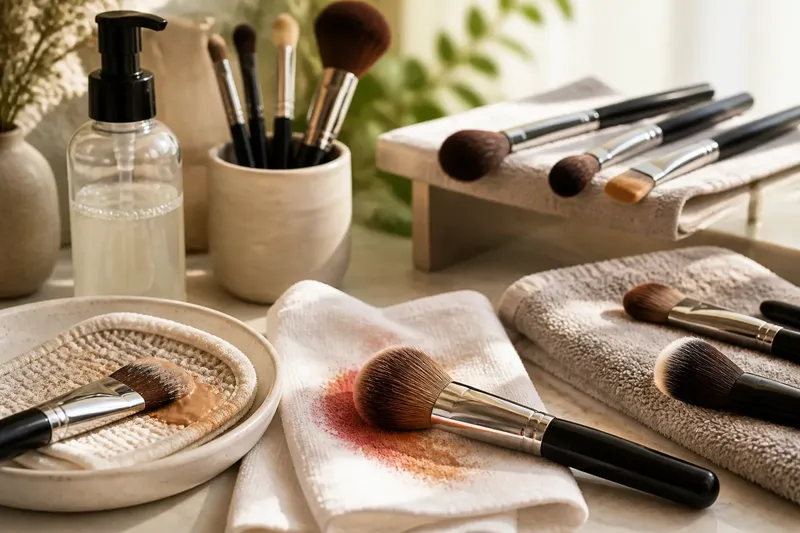
Powder pigment often sits near the surface of the bristles. For a brush used with blush, bronzer or eyeshadow, gently sweep the bristles back and forth on a clean, dry cloth or a purpose-made brush-cleaning pad. A pale cloth makes leftover pigment easier to see; use a separate section as the colour lifts.
Keep the brush moving lightly. Pressing hard or scrubbing against a rough surface can bend the bristles and make their shape harder to restore. Rotate the brush as you sweep so residue is not simply pushed from one side to another.
If colour remains, repeat with a clean part of the cloth. Do not keep rubbing once the brush looks clear. For a brush used with a cream or liquid product, a dry wipe may lift the surface residue but leave a tacky feel. In that case, move to a suitable cleaning method rather than adding more pressure.
A sticky brush needs residue removed, not hidden
Foundation, concealer and cream blush can cling to bristles. Wiping may take away the visible layer while leaving a film that changes how the brush spreads product next time. Use a brush cleanser intended for the brush type, or a gentle cleanser if its directions allow it. Apply only enough to work through the soiled area, and avoid soaking the ferrule—the metal or plastic part that holds the bristles.
Use a clean cloth to lift the loosened residue. If the cleanser is designed to be rinsed away, follow its directions and keep water directed towards the bristles rather than the handle. The aim is to remove the product, not to saturate the brush. A small amount of cleanser used carefully is more useful than repeatedly wetting a brush that cannot dry promptly.
Imagine you have used a flat synthetic brush for cream concealer and notice a tacky patch after wiping it. Apply a little suitable cleanser to the bristles, work it gently through the patch, then remove the loosened product with a clean cloth. The expected observable result is a brush that no longer feels sticky; if the patch remains, repeat the gentle cleaning once instead of scraping at it.
Stiff bristles need a check before more cleaning
Stiffness can come from dried product, but it can also follow from cleanser left behind or bristles that have dried in a bent shape. First look for visible residue near the tips and around the base of the bristles. If product is present, remove it with the method suited to that formula. If the brush looks clean, do not add cleanser automatically.
For a rinseable brush, a brief, controlled rinse may remove leftover cleanser. Gently press the bristles in a clean towel to take up excess water, then arrange them in their usual shape. Avoid twisting or pulling the fibres. A brush that has dried out of shape may feel awkward until its bristles are reshaped and fully dry.
Natural and synthetic brushes can respond differently to cleaning products. Check the brush maker’s care guidance and the cleanser label when instructions differ; some tools have special coatings, glued components or materials that should not be treated with a general method.
Dampness lasts when the brush is put away too soon
A brush can feel dry at the tips while moisture remains deeper in the bristles or near the ferrule. After cleaning, press the brush gently in a towel without rubbing. Shape the bristles with clean fingers, then lay the brush on a dry surface so air can reach the head. Keep the bristles extending beyond the edge of a counter or shelf if that lets them dry without being flattened.
Do not store a freshly cleaned brush in a closed pouch, drawer or upright container while it is damp. A closed space limits airflow, and an upright position can let water travel towards the handle. Leave the brush in an airy place until the centre of the bristles feels dry, not merely the outer layer. The drying time depends on brush density, room conditions and how much water was used, so judge the brush itself rather than relying on a fixed clock.
If you need the tool soon, use another clean brush rather than applying heat to speed things up. A hairdryer or radiator can affect the bristles or the bond that holds them in place. Letting air circulate is the simpler option.
When should you switch from a wipe to a wash?
Can a dry cloth remove every kind of makeup?
No. A dry cloth can lift loose powder and some surface pigment, but it may leave oily or creamy product in the bristles. If the brush still feels tacky or leaves a mark when wiped, use a suitable cleanser.
How can you tell whether a brush is ready to use?
Check the centre of the bristles as well as the tips, and feel for coolness or dampness near the ferrule. If any part still feels wet, leave it out longer rather than putting it away or applying makeup with it.
What should you do if a brush still smells unusual?
Stop using it and give it a thorough clean with a method suitable for its materials, then allow it to dry completely. If the odour remains or the brush has damaged, shedding or persistently unpleasant bristles, consider replacing it.
Can you use the same reset for every brush?
The broad sequence is similar, but the amount of moisture and the cleanser should suit the brush and product. A dense brush used for cream makeup may need more attention than a loosely packed powder brush, while delicate materials may call for specific care.
A simple order keeps the reset manageable
Use this sequence when you finish applying makeup:
Look for visible pigment, a sticky film, stiffness or dampness.
For loose powder, sweep gently on a clean, dry cloth or cleaning pad.
For cream or liquid residue, use an appropriate cleanser and lift the loosened product with a cloth.
If cleanser remains and the brush is suitable for rinsing, rinse the bristles carefully without soaking the ferrule.
Press out excess water with a towel, reshape the bristles and leave the brush where air can reach it.
Check that the centre is dry before returning the brush to its usual storage.
These checks also help you spot when a quick reset is no longer enough. A brush that repeatedly feels sticky, holds colour after cleaning or develops a persistent odour may need a full clean or retirement from use. Do not keep layering more cleanser onto a brush that is already clean; identify the remaining problem first.
A makeup brush reset works best as a brief response to what the bristles show, not as one identical treatment for every tool. Think of wiping a brush like clearing crumbs from a table: useful for loose debris, but not enough for a sticky spill. Remove the residue the brush actually holds, then give it open air until it is dry through the middle.